The Texas Crutch: Wrapping Methods, Texture, and Cook Time
How to wrap your brisket to beat the stall, save time, and keep the bark firm while preserving juicy results.
Affiliate disclosure: This post contains affiliate links. We may earn a small commission from qualifying purchases at no extra cost to you. See our editorial standards for how we research and select recommendations.
What Is the Texas Crutch?
The Texas Crutch is a technique for wrapping brisket in foil or butcher paper during the cook. It started on the Texas competition circuit in the early 1990s, where competitors used it to nail their timing. The goal is to get past the stall, hold onto moisture, and manage how the bark develops.
Understanding the stall
The stall is a temperature plateau caused by evaporative cooling. Surface moisture evaporates faster than the smoker can heat the meat, keeping the temperature stuck. This typically occurs between 150°F and 170°F internal, though some references narrow that range to 150°F to 165°F. The stall can last anywhere from 30 minutes to several hours; other data suggests it usually runs 2 to 6 hours.
Wrapping eliminates air circulation around the meat, which stops the evaporative cooling. The meat then cooks in its own rendered fat and juices. Because liquids conduct heat better than air, the temperature starts climbing again, and collagen turns to gelatin more quickly.
When to Wrap
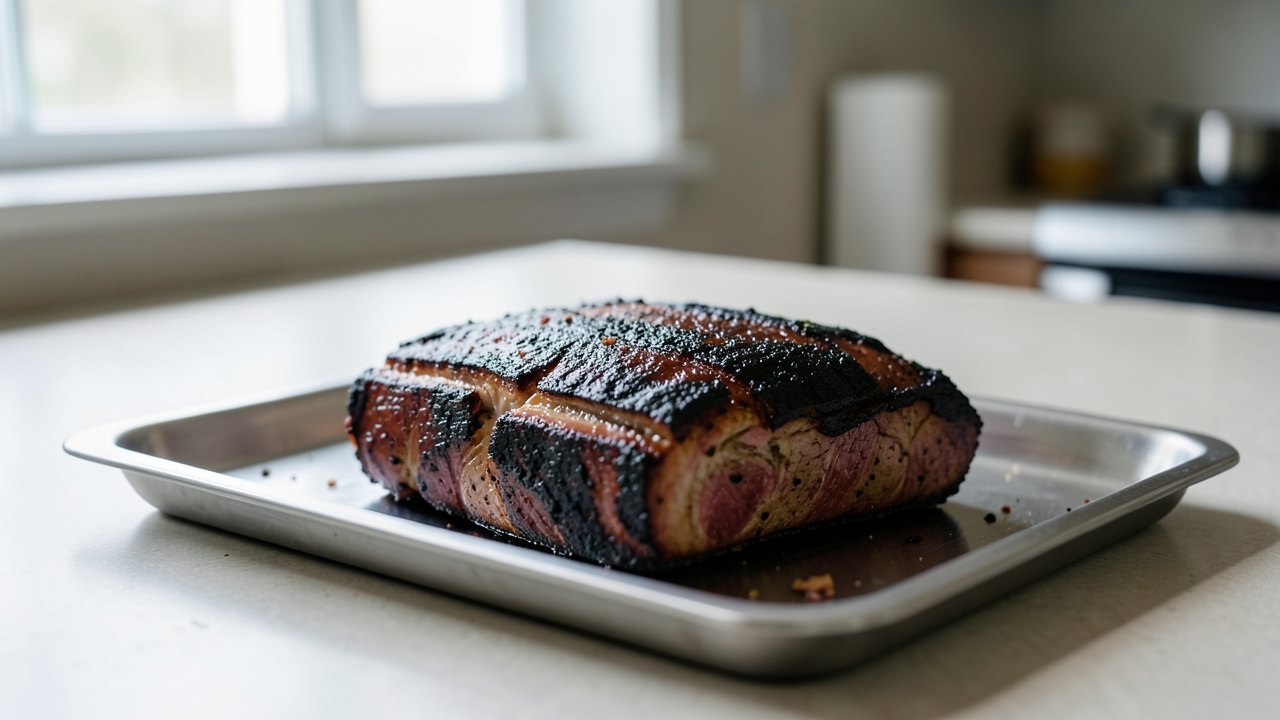
Most sources suggest wrapping when the internal temperature hits 160°F to 170°F. Some prefer a hard stop earlier, at 160°F to 165°F, while others recommend wrapping right around 160°F. Temperature is a guide, but the bark is the real signal. Wrap only when the bark is set. You are looking for a dark mahogany or chocolate color that feels firm and crisp. The rub should stay put when you touch it, and the surface should resist scraping.
Timing matters. Wrap too early, and you will stop bark development and end up with a soft texture. Wrap too late—past 180°F—and you might miss the window to get the most out of the crutch.
Foil vs. Paper vs. Naked
Your choice comes down to what you value: speed, bark, or moisture.
Aluminum Foil
Foil is the fastest route. It seals everything in tight, pushing through the stall aggressively. Total cook time can drop to 7 to 10 hours. On time savings, the data varies: some sources say foil shaves 2 to 4 hours off the cook, while others claim it only reduces finish time by 1 to 2 hours. Foil holds the most juice and makes the process easy and forgiving. The trade-off is texture. Foil creates a steamy environment that softens the bark significantly. If you leave it in too long, you risk a mushy, pot-roast texture. Foil also stops smoke penetration once wrapped, so the smoke flavor will be milder.
Butcher Paper
Pink, unwaxed butcher paper sits in the middle. Food-grade pink unwaxed butcher paper comes on a roll, so you can tear a sheet to fit the brisket. It is breathable, so it lets some vapor escape while keeping the exterior drier than foil. This helps preserve a firmer bark. Cook times run 8 to 12 hours total. Regarding time savings, opinions differ. Some data points show a moderate reduction, while other sources state paper only cuts 30 to 45 minutes off a naked cook. Paper traps moisture well but allows some vapor release. It is harder to seal than foil and the paper can tear, so it requires a bit more practice. Smoke flavor is moderate with a cleaner profile; there is some debate on whether smoke penetrates the paper or if it just allows vapor escape without direct smoke penetration.
Naked (No Wrap)
Skipping the wrap takes the longest. Cook times stretch to 12 to 18 hours. You get the crispiest, thickest bark and the strongest smoke flavor since absorption continues the whole time. The downside is that it is the hardest method, requiring constant monitoring and spritzing, and there is a higher risk of the meat drying out.
Hybrid Methods and Execution
If you want the best of both worlds, try the foil boat. This involves wrapping the bottom and sides in foil while leaving the top exposed. It helps shave off stall time while protecting the top bark from direct steam. You can also switch methods mid-cook, like unwrapping from paper and rewrapping in foil if the cook is dragging.
How to wrap
Use heavy-duty materials. If using foil, double-layer it to prevent tearing and punctures. For paper, use unwaxed pink butcher paper only; never use waxed or parchment paper, as these can melt or transfer chemicals.
Fold the wrap snugly against the meat with no air pockets. Tuck the sides and roll or enclose the meat so the seam ends up underneath. Crimp the edges of foil to make a watertight seal.
Adding liquid
You can add 2 to 4 tablespoons of beef broth, apple juice, or beef tallow before sealing. Keep it under ¼ cup; any more than that and you risk braising the meat instead of smoking it.
Post-Wrap Management
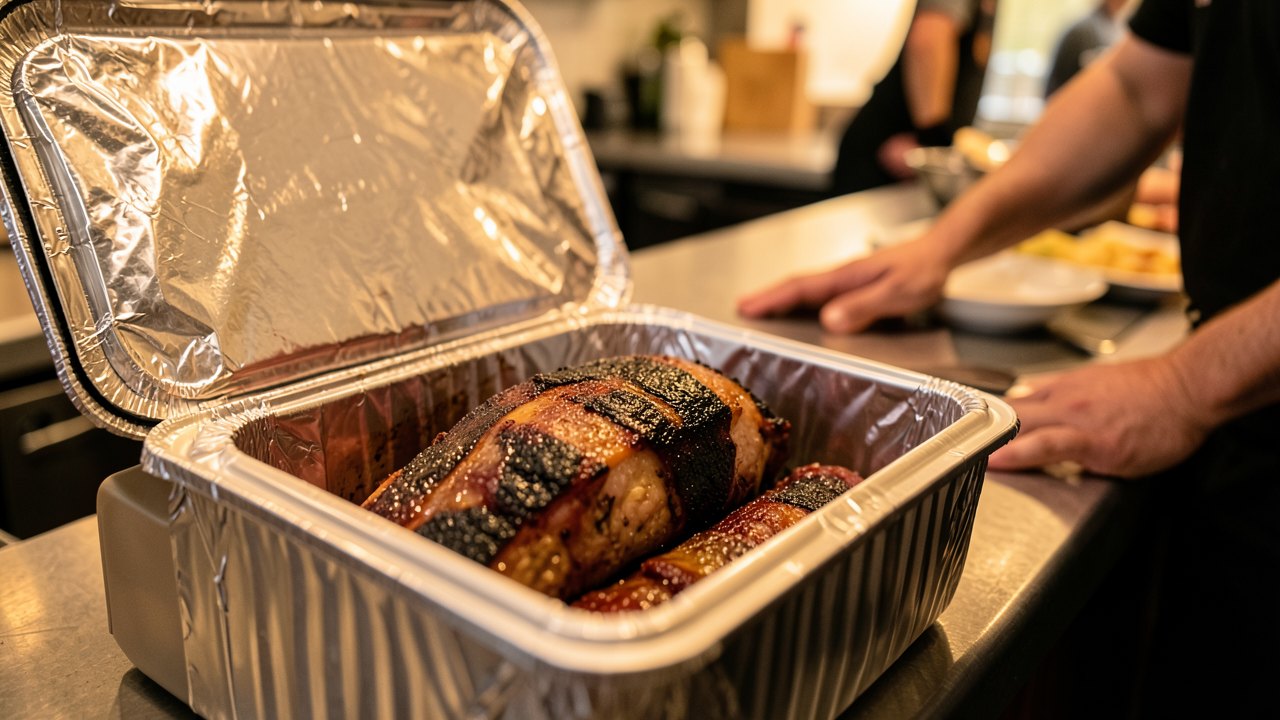
Once wrapped, you can safely bump the smoker temperature to 275°F since the wrap protects the exterior. Watch the meat closely. Temperature can jump 10 to 20°F per hour once the stall breaks. Check the brisket every 30 minutes to avoid overcooking.
Doneness and Resting
Wrapped brisket usually needs 2 to 4 hours after wrapping to get tender. Some sources estimate this finish window is shorter, around 1.5 to 2 hours.
Target internal temperatures vary slightly. Most guidelines aim for 200°F to 205°F, while other references suggest a finish range of 195°F to 203°F. Temperature alone is not enough. The meat must probe like warm butter with almost no resistance in the thickest part of the flat.
Resting is non-negotiable for juice redistribution. Rest the wrapped brisket for at least 1 hour. There is disagreement here, with some advice recommending a rest of only 30 minutes.
If you used foil, the bark might feel soft. You can re-crisp it by unwrapping at 203°F and returning the meat to the smoker at 225°F to 250°F for 15 to 30 minutes. This evaporates surface moisture and firms up the bark.
Common Mistakes to Avoid
- Wrapping before the bark sets.
- Wrapping past 180°F, which misses the stall window.
- Loose wrapping that creates air pockets and softens the bark unevenly.
- Ignoring the rapid temperature rise after wrapping, leading to overcooked or mushy meat.
- Slicing right away, which causes juice loss.
- Using the wrong paper types like waxed or parchment paper.


