Banked Coal Methods & Fire Structures for Heat Control
How to arrange coals for the best heat control, manage vents, and handle conflicting advice on fire structures and tools.
Affiliate disclosure: This post contains affiliate links. We may earn a small commission from qualifying purchases at no extra cost to you. See our editorial standards for how we research and select recommendations.
Fire Structures & Definitions
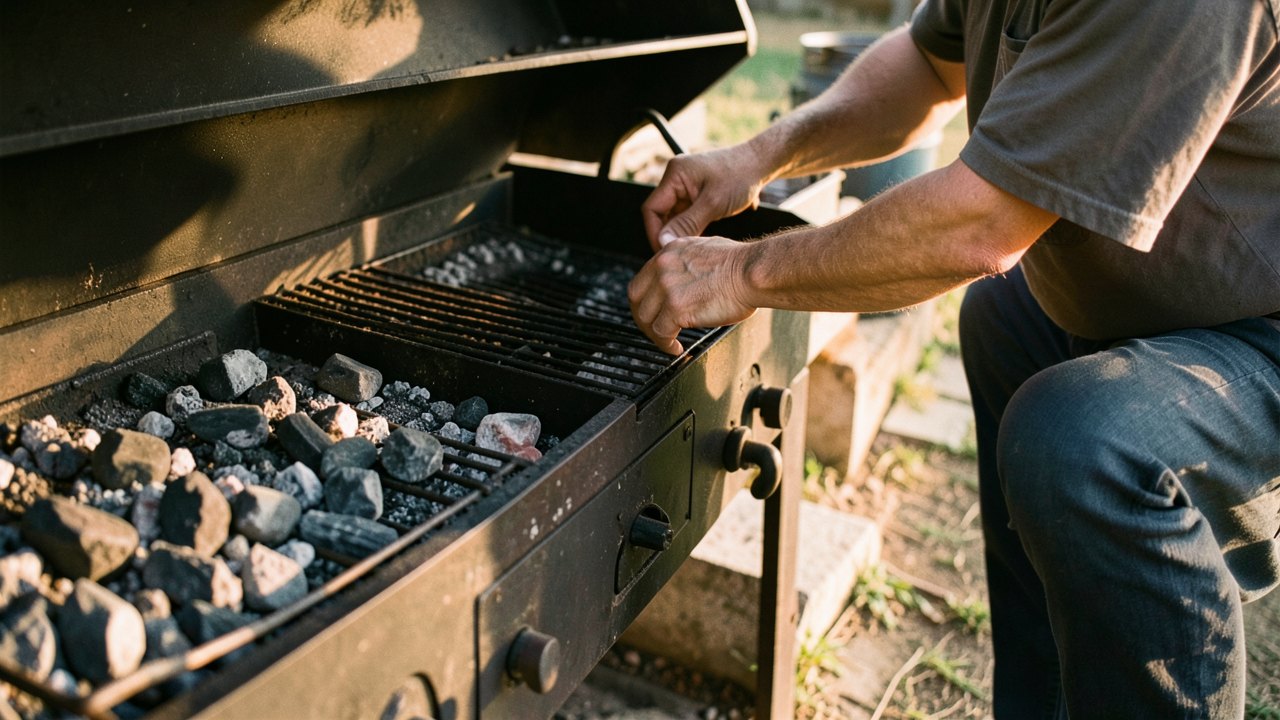
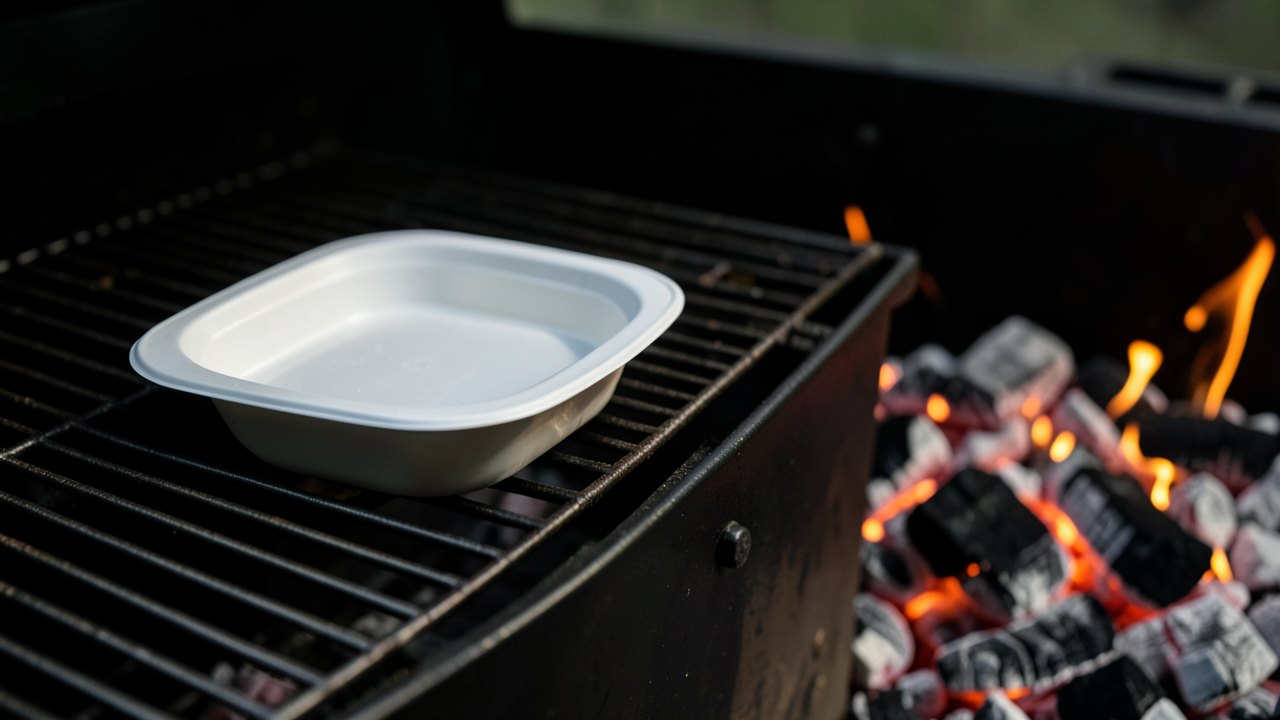
There are several ways to arrange charcoal in a grill, each designed for different cooking outcomes. A "banked" fire creates a large coal-free area by piling coals steeply against one side of the grill. This is often used for large cuts of meat, like brisket or pulled pork, that require extended cooking times. A "double-banked" setup places steep piles of coals on opposite sides, leaving a cool center, often with a disposable pan to catch drippings.
There's differing opinion on the reliability of double-banked and three-zone configurations for extended cooking. Some suggest a three-zone split – two equal piles on opposite sides with a clear middle – as ideal for low-and-slow smoking and maintaining a steady temperature. Others caution that a double-banked setup's heat output can be inconsistent over long periods and recommend it primarily for quicker cooks like a whole chicken. The debate centers on whether these formations reliably maintain consistent heat over time or are better suited for shorter cooking durations.
The "snake" method involves arranging unlit coals in a line or curve along the grill’s edge, ensuring they touch. One end is lit, and the fire slowly burns down. This method is known for low-and-slow cooking over extended periods with minimal intervention. For quicker cooks, a single-level fire evenly distributes coals across the bottom for uniform heat. A two-level fire places two-thirds of the coals over half the grill, with the remaining coals spread over the other half, establishing a hotter searing zone and a slightly cooler area.
A two-zone setup typically involves piling lit coals on one side and leaving the opposite side completely clear. Food on the clear side cooks through circulating hot air rather than direct flame. A variation on this approach includes a majority of coals on one side with a thinner layer on the other, creating a high-heat searing zone and a lower-heat finishing zone. While some definitions require the indirect side to be completely clear of coals, others suggest a reduced layer is sufficient.
Low Heat Methods (225°F–350°F)
Target temperatures vary depending on the food being cooked. Low-and-slow cooking generally falls between 225°F and 350°F; ribs, brisket, and pork shoulder are often smoked between 225°F and 250°F, while roasts, whole chickens, and turkeys may target 250°F to 350°F. To achieve a low-and-slow fire, start by filling a chimney starter about halfway with charcoal and lighting it until the coals are covered in gray ash, which takes roughly 15 to 20 minutes. A chimney starter lights the batch from newspaper or a starter cube, with no lighter fluid near the food. Once ready, pour the coals to one side of the grill and place a foil pan filled with water on the empty side. Close the lid, set vents to about one-quarter open, and wait 10 minutes for the temperature to stabilize, adjusting the bottom vent incrementally to reach your target. Half a chimney of lit coals is enough to initiate a low cook, and charcoal can last 2 to 3 hours at this heat before needing to be replenished.
For the snake method, arrange unlit coals in a line, ensuring they touch, and place wood chunks between them. Light one end using a small chimney starter, close the lid, and adjust the vents to maintain a temperature of 225°F to 250°F. This setup can often run for 2 to 2.5 hours without needing attention. For cooks exceeding 3 hours, adding a handful of unlit coals every 60 to 90 minutes can maintain the heat. Briquettes are often preferred for long smokes due to their consistent temperature retention, while lump charcoal burns hotter and faster. Dry wood chips smoke faster and create cleaner smoke, and soaking them is generally discouraged. Maintaining a closed lid is vital to prevent heat loss and keep the temperature stable.
Medium and High Heat Methods
Medium heat, ranging from 300°F to 450°F, is suitable for items like whole chicken, thick chops, and vegetables, or for slowly cooking thicker cuts. To reach these temperatures, open the vents halfway to three-quarters. A two-level fire works well at this temperature range: distribute two-thirds of the coals over half the grill and the remaining coals evenly over the other half, creating a hot side for searing and a cooler side to finish thicker items without overcooking. Medium heat helps prevent large cuts from drying out while cooking through.
High heat, 450°F and above, is used for searing steaks, chicken breasts, burgers, fish, and vegetables. Direct heat in the 450°F to 550°F range is common for searing, with temperatures potentially reaching 600°F to 650°F directly over the coals with the lid closed. To achieve high heat, spread coals in a single, even layer and light them until they are white or covered in gray ash. Place food directly over the coals and fully open the vents to boost airflow and temperature. Direct radiant heat creates a quick sear, locking in flavors and developing a crispy crust.
There's conflicting information about how long high heat lasts. Some sources claim a transition from high to medium-high heat in just 5 to 10 minutes, while others suggest a full chimney of briquettes can maintain high heat for 1 to 1.5 hours. This likely depends on whether the lid is open or closed and how the fuel is being managed. Searing fatty foods can cause flare-ups; a banked setup provides a safe area. If flames become excessive, move food to the coal-free area to finish cooking.
Temperature Control & Equipment
Temperature control is largely managed through airflow. Charcoal requires oxygen, and vents control the heat. Opening vents increases airflow and raises the temperature, while closing them reduces oxygen and lowers the heat. The bottom vent serves as the primary adjustment dial, while the top vent typically remains open to allow smoke to flow and prevent temperature fluctuations, although some setups initially suggest opening both vents. For low heat, setting both vents to around one-quarter open is a common starting point.
Accurate temperature measurement is important. Some rely solely on a hand test – holding a hand 4 to 5 inches above the coals: 2 to 3 seconds indicates approximately 450°F, suitable for thin cuts like pork chops or tuna, while 4 to 5 seconds indicates 375°F to 450°F. Others emphasize using a clip-on thermometer at grate level, as lid thermometers can be inaccurate by as much as 50°F to 75°F. Preheating the grill with the lid closed for 5 to 10 minutes aids in stabilizing the temperature.
Lump charcoal burns hotter and is well-suited for tasks like reverse searing, while briquettes offer more consistent temperatures for long smokes. Using charcoal baskets can help improve heat control. Long-handled tongs, 16 inches or more, are recommended for safe food handling at high heat. The Minion method, where lit coals are buried in unlit ones to reduce refueling frequency, is also an option, though the specific steps for this method vary.