The Real Deal on Water Pans: Heat Control, Smoke, and the Myths
Thermal buffering, smoke adhesion, and the truth about flavoring liquids.
Affiliate disclosure: This post contains affiliate links. We may earn a small commission from qualifying purchases at no extra cost to you. See our editorial standards for how we research and select recommendations.
How Water Pans Actually Work
Water's high heat capacity means it can absorb significant amounts of energy before its temperature rises, making it an excellent thermal buffer. In a smoker, a water pan serves to absorb heat spikes, smoothing out temperature fluctuations and maintaining a steady environment during lengthy cooking sessions. When water reaches its boiling point at 212°F, it remains around that temperature, utilizing the heat to turn into steam rather than allowing the air temperature to rise sharply. This evaporation process not only cools the environment but also retains heat more effectively than dry air if the fire intensity drops.
There is some disagreement about the extent to which a water pan limits temperature control. Some sources suggest that the pan imposes a hard limit, preventing the smoker from exceeding 212°F and making it difficult to reach 220°F until the water evaporates. Other sources argue that while the pan acts as a stabilizer and reduces temperature spikes, it doesn’t prevent reaching standard smoking temperatures if proper management of airflow and fuel is maintained. The general consensus is that the pan serves as a buffer, not a hard ceiling: with appropriate ventilation and fuel management, achieving and maintaining 225°F is still possible.
Moisture, Smoke, and the Meat
A common misconception is that a water pan adds moisture to the meat, which is incorrect. Meat does not absorb moisture from the air; instead, internal moisture loss is due to temperature and protein denaturation. The humid environment created by the water pan slows surface evaporation, protecting the exterior from drying out too quickly. This helps prevent overcooking the surface before the internal temperature reaches the desired level, thus retaining moisture better through protection rather than direct absorption.
Steam also enhances smoke flavor adhesion. Smoke compounds adhere better to a cool, moist surface, and water vapor condensing on the meat creates a film that allows smoke particles to adhere more effectively, supporting better bark development and smoke flavor. Once the meat surface heats up and dries out, this benefit diminishes. Additionally, the humidity can aid in the formation of the smoke ring by keeping surface temperatures lower longer, allowing for deeper penetration before the reaction stops at about 145°F. The slower cooking process also allows for better breakdown of connective tissues and rendering of fats.
Setup and Placement
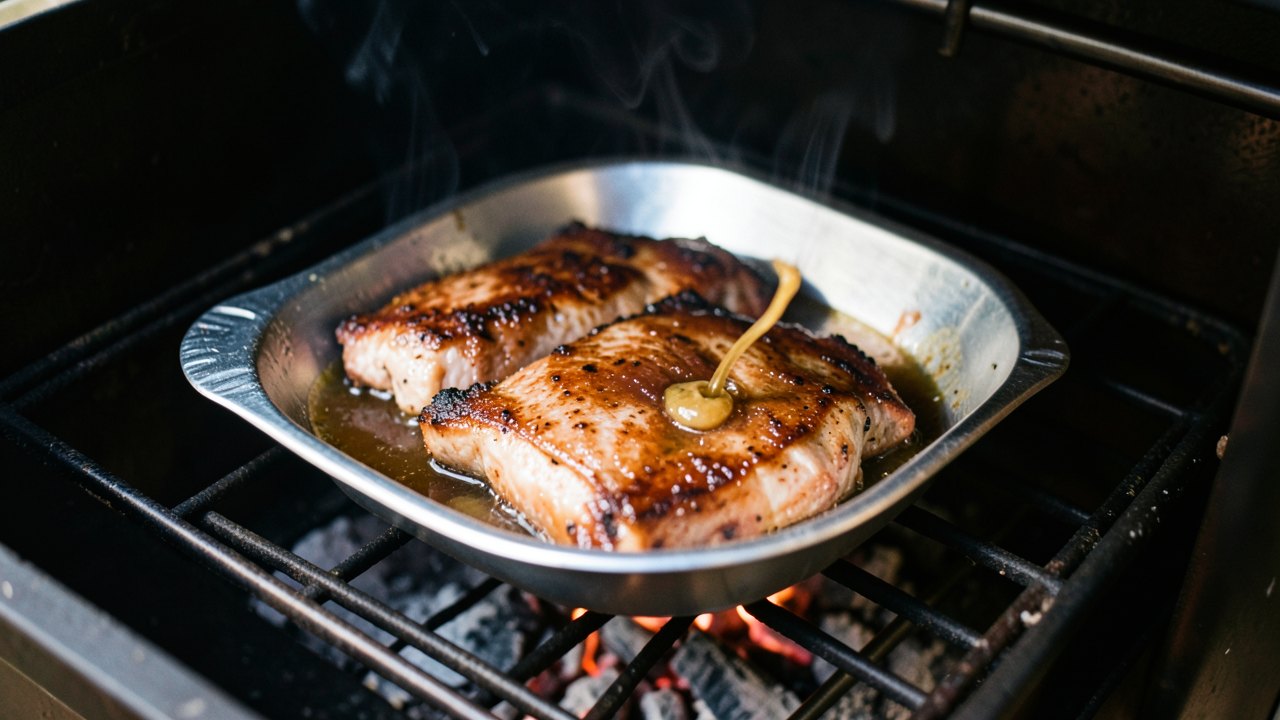
The placement of the water pan is crucial. If your smoker has no built-in pan, a heavy-duty aluminum foil pan filled with water does the same job. It should be positioned above the heat source to generate steam and stabilize temperature, while a drip pan is placed directly under the meat to catch drippings and prevent flare-ups. Grease should be avoided on the water pan to ensure effective evaporation.
Placement varies based on the type of smoker. In kettle or charcoal grills, the water pan should be placed directly over or beside the coals in a two-zone setup. For offset or reverse flow smokers, place the pan on the cooking grates between the meat and the firebox. For gas or electric grills, set the pan over the lit burners while the meat is over the inactive zones. In vertical smokers, the pan should be at the bottom. Aluminum pans are recommended for their heat resistance and durability.
A water pan may be unnecessary for certain smokers. Kamado-style grills, for instance, naturally maintain temperature and humidity, making a water pan redundant and potentially creating excessive humidity. In pellet grills, digital temperature regulation typically provides stability, so a water pan is optional unless the chamber tends to be dry, provided it doesn’t obstruct airflow.
Operations and What Goes in the Pan
Use hot water to fill the pan, as cold water would drop the chamber temperature and waste fuel. Fill the pan about halfway, as overfilling risks spilling when the water begins to boil. For short cooks of 3 to 4 hours, a half-fill might suffice without refilling. For longer cooks, check and refill every 4 hours to maintain steam. One experiment used 12 oz of apple cider, expecting it to evaporate within 1 to 2 hours before the temperature rose, but the vapor remains water regardless of the initial liquid.
Avoid adding flavorings like beer, wine, or herbs to the pan, as research shows they do not flavor the meat. Only water vapor enters the chamber, while sugars and non-volatile compounds stay in the pan, eventually forming a sticky residue. Using flammable fluids like flavored oils or high-proof alcohol is also risky and can pose a safety hazard.
For easier cleaning, allow the fat to solidify before scraping it out. Adding ice cubes to the pan can speed up the solidification process, making removal simpler. The steam condensation on the lid can also help prevent soot from sticking, reducing the cleaning effort.
When to Skip the Water Pan
There are scenarios where a water pan can be detrimental. If a thick, hard bark is desired, the humidity can prevent the meat surface from drying out sufficiently. Similarly, for poultry, a water pan can hinder the crispness of the skin. For short or high-heat cooks, such as steaks, burgers, and hot-smoked fish, dry heat is essential for proper searing and browning. Open-fire grills also benefit less from a water pan, as the moisture disperses quickly. In insulated cookers, excessive moisture can lead to longer cooking times and softer exteriors. Use a water pan when stabilizing temperature and enhancing smoke adhesion is necessary for long cooks in high-airflow smokers, but omit it when dry heat, crisp textures, or optimal performance from the smoker itself are priorities.