Tailgate Grilling Playbook: Gear, Safety, and Crowd Cooking
Everything you need to set up, cook safely, and feed a crowd at the lot.
Affiliate disclosure: This post contains affiliate links. We may earn a small commission from qualifying purchases at no extra cost to you. See our editorial standards for how we research and select recommendations.
Picking the Right Gear
Grill size should match the crowd. A grill with less than 150 square inches of cooking area feeds 2 to 4 people. For 5 to 8 people, look at 200 to 250 square inches. If you're cooking multiple items for a group of 8 or more at once, you need 280 square inches or more. Weight matters if you're carrying the grill by hand; aim for under 30 pounds. Wheeled or integrated cart designs handle heavier weight more easily.
Several models stand out for different needs. The Weber Traveler offers 320 square inches and weighs about 62 pounds; it features an integrated scissor cart that folds and locks in under a minute, and GS4 burners that hold heat in wind. The Cuisinart CGG-180 is a budget-friendly option with 145 square inches, weighing 17 pounds with telescoping legs, suitable for 4 to 6 people. The Coleman RoadTrip 285 handles large groups with 285 square inches, about 48 pounds, 20,000 BTUs, three independent burners for three-zone cooking, and a wheeled base. For electric options, the Ninja Woodfire Outdoor Grill & Smoker provides about 314 square inches and weighs 40 pounds; it uses wood pellets for flavor rather than heat, requires a 120-volt outlet or power station, and works well in flame-restricted lots. Charcoal enthusiasts can look at the Weber Jumbo Joe (18-inch), which has 240 square inches, weighs 19 pounds, includes a locking lid handle and ash catcher, and has bottom vents for two-zone fire. The Blackstone 17-inch Tabletop griddle offers 260 square inches, weighs 29 pounds, uses cold-rolled steel, and handles breakfast, smash burgers, and foods that might fall through grates. A hitch-mount option like the HitchFire Forge 15 mounts to a 2-inch receiver, swings 90 degrees to clear the tailgate, weighs about 35 pounds, and saves cargo space.
Electric grills like the Current Model G Dual Zone offer app and Wi-Fi monitoring, precise grate-level temperature control, dual-zone flexibility, no open flames, and easy wipe-down cleanup.
Don't forget the essentials. Pack a folding table, grill stand, backup 1-pound propane cylinders, grill cover, carry bag, wireless meat thermometer, grill light, chimney starter for charcoal, heat-resistant gloves, and a cleaning brush.
Safety Protocols
Maintain at least 10 feet of clearance between the grill and any vehicle, tent, or flammable material. Gas fumes and dry debris in parking lots create real fire risks. Position the grill so wind blows away from tents, canopies, and crowds. Grills with wind guards, deep lids, or a low center of gravity perform better in exposed lots.
Transport propane cylinders upright, secured, and in a well-ventilated area of the vehicle. Never store them in a sealed trunk on a hot day. If you use charcoal, let coals cool completely before disposal; this can take hours. Never dump hot ash in trash cans or on pavement, as it can smolder and start fires. Hitch-mounted grills require a fully secured hitch pin before lighting, and you should verify venue rules since some areas restrict hitch mounts.
Food safety depends on a thermometer. An instant-read like the Thermapen ONE reads in about a second and folds to fit a pocket, so it travels to the lot with the rest of the kit. Parking lot temperatures and inconsistent heat make eyeballing doneness dangerous, especially for chicken. Soak wooden skewers in water for at least 30 minutes before grilling to keep them from catching fire.
Prep, Timing, and Setup
Prep marinades, sides, cooler organization, seasoning, and shopping the night before to reduce day-of stress. Marinate meats for at least 1 hour or up to 24 hours. Startup times vary by fuel. Gas and electric grills fire up in 1 to 2 minutes. Charcoal requires 15 to 20 minutes for coals to ash over properly; this is the trade-off for the flavor.
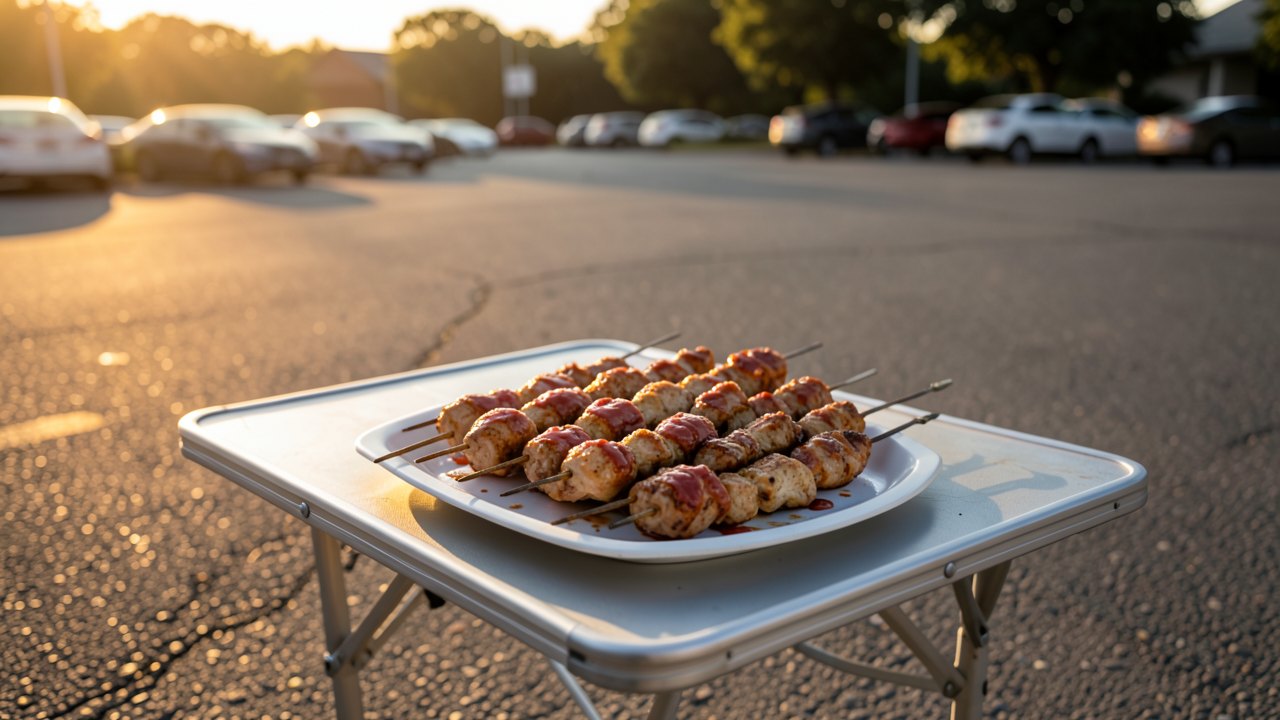
When assembling skewers, use two skewers per item, such as shrimp, to keep food flat for even cooking and prevent spinning. Removing shrimp tails before grilling helps, since guests often throw them, which can be messy or unsafe.
Cooking Techniques and Heat Management
Two-zone cooking is essential for control. Use indirect heat to warm food gradually and direct heat for searing or finishing. This prevents burning the outside while leaving the inside raw. For hot dogs, warm them on indirect heat, then move to direct heat for 1 to 2 minutes, turning often, to get char without burning. Charcoal setups should create a high-heat zone for searing and a low-heat zone for steady, even cooking.
Heat strategy can differ. Some advice suggests starting with lower grill temperatures and increasing gradually to maintain control and avoid burning; this allows time to cool the grill if it gets too hot. Gas grills make adjustments easier than charcoal. Other approaches, like preheating to 400 degrees immediately for taco bundles, rely on high direct heat. High heat isn't ideal for all foods; thick cuts, bone-in chicken, roasts, and root vegetables risk undercooking, so lower temperatures often work better for those items.
Leave 1/2 to 1 inch of space between foods on the grate to allow heat circulation. Cook in batches or use indirect zones to avoid overcrowding. Chicken must reach 165 degrees internal temperature. Shrimp cooks in 2 to 3 minutes per side. For hot-holding, steam tables keep food warm without overcooking and facilitate self-service. You can also hold proteins like chicken in stock and butter to enhance flavor and reduce stress.
Portioning and Menu Planning
Plan for approximately 2 tacos per guest when other dishes are served. A bulk taco recipe using 10 pounds of meat yields about 50 tacos at 3 ounces each, or roughly 80 tacos at 2 ounces each. To streamline portioning, thread small bundles of meat onto skewers; aim for about 3 ounces per bundle and three bundles per skewer.
Offer hot, cold, and room-temperature options. Include 'set and forget' staples like fruit and cheese plates and salads to free up grill time. Provide inclusive options such as tacos on corn tortillas for gluten-free needs, and universally friendly sides like hummus or grilled veggies with chimichurri. Use squeeze bottles for ketchup, mustard, and relish for faster service.
Bundle Skewer Street Tacos
This crowd-friendly recipe uses 10 pounds of chicken or beef shoulder steak, sliced thin. Marinate with garlic, onion, cumin, onion powder, garlic powder, salt, pepper, coriander, lime juice, and vegetable oil. Grill chicken until it reaches 165 degrees; cook steak to desired doneness. Transfer the bundles to small taco shells with salsa, lettuce, and tomatoes.
Equipment and Fuel Considerations
There's mixed advice on fuel preferences for crowds. Some views strongly advocate for electric technology to skip charcoal, noting that electric grills eliminate flare-ups, ash handling, and refueling pauses, making them smarter and cleaner for crowd management. Other perspectives position charcoal as the best flavor option, arguing the 15 to 20 minute setup is a worthwhile trade-off for taste, and recommend charcoal for college tailgates where allowed. Gas is often considered the default choice for most tailgaters due to convenience and consistency. Electric grills are best suited for flame-restricted venues or RV setups, though some argue they are superior regardless of restrictions. Many NFL lots restrict charcoal and open flames, making electric a necessary alternative there.
When evaluating grills, raw BTU numbers matter less than real-world design. A well-designed 12,000 BTU burner can outcook a poorly designed 20,000 BTU unit. Cooking area, wind resistance, and temperature control features often count more than power output. Some focus heavily on technology features like dual-zone flexibility and sensing technology, while others prioritize traditional mechanics and flame performance.


