Spatchcock Turkey on a Pellet Grill: Specs, Brining, and Smoke
Spatchcocking flattens the bird to cut cook time and even out doneness. Here's how to prep, brine, and smoke a turkey safely, with notes on where experts agree and where methods differ.
Affiliate disclosure: This post contains affiliate links. We may earn a small commission from qualifying purchases at no extra cost to you. See our editorial standards for how we research and select recommendations.
Picking and Prepping the Bird
When selecting a turkey for smoking, choose one that weighs between 10 and 14 pounds. Turkeys larger than 14 pounds may spend too much time in the temperature danger zone (40–140°F) during cooking, which can affect food safety.
To prepare, start by thawing the turkey in the refrigerator. For every 4 to 5 pounds, allow one day for thawing, and add an extra day for preparation and brining. Before you begin, remove the neck, giblets, hock locks, and any pop-up timers. Trim away excess fat and skin from inside the cavity, rinse the bird thoroughly with cold water, and pat it dry.
Carefully examine the packaging. If the turkey has been factory-injected or pre-brined, skip the brining process. Adding more salt at this point could lead to oversalting and prevent the salt from penetrating properly.
Spatchcocking for Even Cooking
Spatchcocking is highly recommended for smoking turkeys. By removing the backbone and flattening the bird, you create an aerodynamic shape that reduces cooking time by about half. This method also helps to balance the temperature between the breast and thighs, a common issue with whole birds. Additionally, it maximizes the surface area for seasoning and smoke penetration, making carving much easier later.
To spatchcock the turkey, use curved poultry shears to cut along both sides of the spine until the backbone is removed. Make a shallow cut down the breastbone, flip the turkey breast-side up, and press firmly until the bone cracks, flattening the bird.
Brining and Drying the Skin
For seasoning, most guides suggest using a dry brine for its convenience and ability to dry out the skin for better texture. After brining, air-dry the turkey uncovered in the refrigerator overnight or for 2 to 3 hours to further dehydrate the skin. Avoid applying cooking oil before smoking, as it can inhibit the skin from crisping. Optional enhancements include injecting the breasts and thighs with a mixture of chicken broth, melted butter, and garlic powder, or spreading an herb butter rub under and over the skin. Tuck the wing tips under to prevent them from burning.
- Dry brine: Apply 3 to 6 tablespoons of kosher salt or commercial dry brine over all surfaces and under the skin. Place the turkey on a wire rack over a baking sheet and refrigerate uncovered for 8 to 24 hours. The salt draws out surface moisture, which is then reabsorbed with seasoning, and the extended drying time yields superior browning and textural contrast.
- Wet brine: Some methods use a wet brine, submerging the bird for about one hour per pound. Do not exceed 12 hours, as this can degrade texture and make the meat too salty.
Grill Setup and Wood Selection
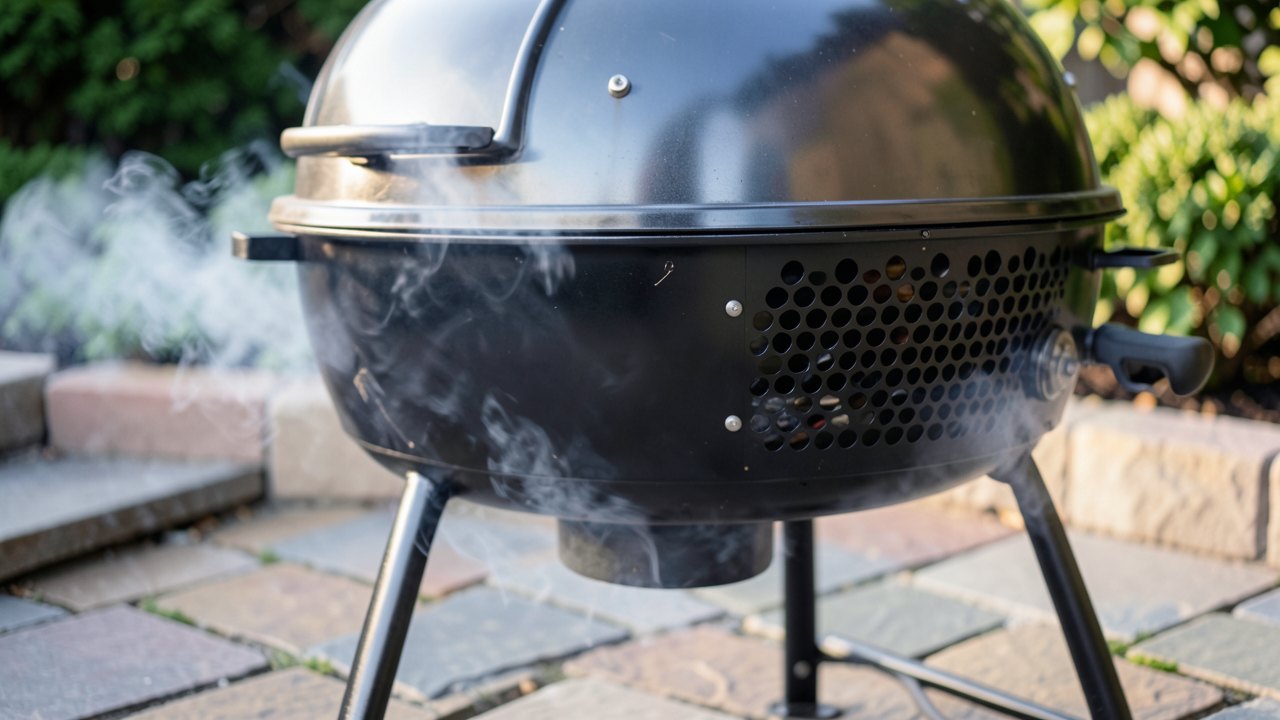
Preheat your grill to your desired temperature with the lid closed. Wait until the thick startup smoke clears before placing the turkey on the grates.
When choosing wood for smoking, fruitwoods like apple, cherry, pecan, alder, or beech offer a mild, sweet smoke that complements poultry without overpowering it. Hickory, maple, and oak provide a medium, traditional profile, while mesquite is strong and aggressive; use it sparingly to avoid overwhelming the flavor.
High-quality hardwood pellets are ideal for clean burns. Pellet grills, which function like convection ovens with precise indirect heat, can reach temperatures high enough to render subcutaneous fat and crisp the skin without constant monitoring.
Cooking Process and Temperatures
Place the turkey directly on the grates, breast-side up. Position the breasts towards the cooler side and the legs towards the hotter side to balance the different cooking speeds of the meat.
Cooking temperatures vary among guides. Common steady states range from 225°F to 325°F. Some sources caution that temperatures below 275°F can result in rubbery skin, while others find 275°F to be optimal. A staged approach, starting at 225°F and increasing to 350°F or 450°F later in the cook, is also used by some.
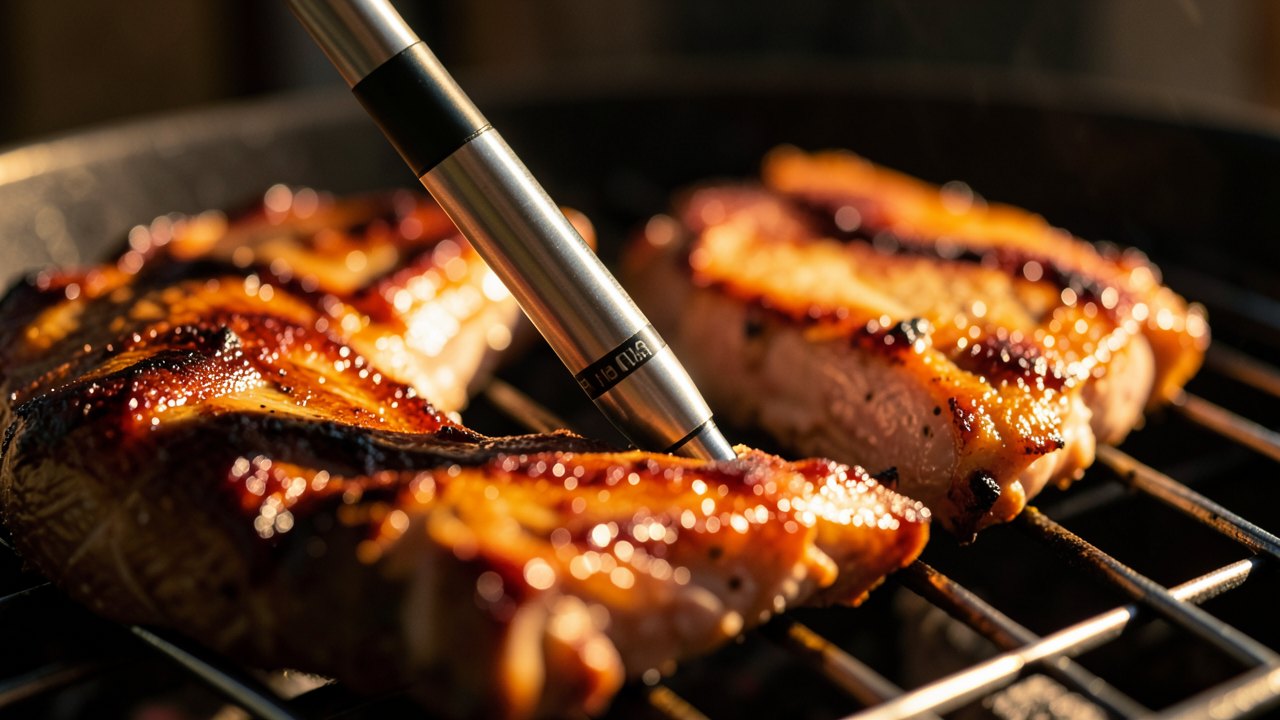
Monitor the internal temperature of the turkey by inserting a thermometer probe into the thickest part of the breast, avoiding the bone. A leave-in monitor like the ThermoWorks Smoke keeps that probe in place for the whole cook and can sound an alarm at your target. You can also check a thigh simultaneously. The timing for probing varies, with some methods suggesting immediate probing and others waiting about an hour. Begin checking for doneness at 1.5 to 2 hours into the cook.
Keep the lid closed as much as possible to maintain temperature and smoke adherence. Total cook time typically ranges from 2 to 4 hours, or roughly 10 to 12 minutes per pound.
Points of Variation and Caution
There are a few areas where recommendations differ:
- Basting and rotation: Some guides suggest basting with melted butter and rotating the bird hourly. Others advise against this, noting it can tear the skin and wash away the rub.
- Orientation: Most methods keep the bird breast-side up throughout. One variation places the bird underside down for the first two hours before flipping breast-side up.
- Pull temperature: Most sources recommend pulling the turkey when the breast reaches 165°F. Others prefer pulling at 160°F, relying on carryover heat during resting to reach safe doneness. The thigh target is 175°F, as dark meat tolerates higher heat without drying out.
Avoid using sugar in rubs as it can carbonize above 300–325°F. If you use a sweet rub, reduce the chamber temperature to prevent burning.
Resting and Serving
Once the turkey reaches the target internal temperature, remove it from the grill. Tent it loosely with foil and let it rest for 15 to 30 minutes. This resting period is crucial as it allows myofibrils to reabsorb juices, ensuring the meat stays moist when carved. Flattening the bird also simplifies the carving process.
References