Smoker Humidity: Managing Moisture for Bark, Speed, and Juiciness
Data reveals a target internal humidity of around 10% works well, while external air humidity has mixed impacts. Equipment airflow and altitude significantly change moisture management requirements.
There is a noticeable divide in the research concerning the effects of external air humidity on smoking meat. Some studies suggest that regional humidity levels significantly influence cooking times: higher humidity speeds up the cooking process, while lower humidity extends it by promoting rapid surface evaporation. In contrast, other analyses argue that external humidity has minimal impact because the hot interior of a smoker remains relatively dry compared to the ambient air, meaning that outside moisture seldom alters the outcome unless extreme weather conditions are involved.
Within the smoker’s chamber, the data is more definitive. A humidity level of around 10% is considered optimal as it balances moisture retention without washing away smoke flavor or impeding bark development. Higher humidity levels can enhance the breakdown of collagen into gelatin, deepen the smoke ring, prevent the formation of a dry pellicle, and improve the adhesion of smoke particles. However, excessively high humidity can lead to overcooking the surface, inhibit bark formation, and strip away flavor.
High-altitude cooking presents unique challenges. The lower atmospheric pressure at high elevations reduces water’s boiling point, causing surface moisture to evaporate and cool the meat at lower temperatures compared to sea level. While the internal temperature goals remain the same, the faster moisture loss often requires cooks to reduce the smoker’s temperature to maintain juiciness, thereby increasing overall cook times. Managing the fire also becomes more complex due to the thinner air, necessitating closer monitoring to sustain consistent cooking temperatures.
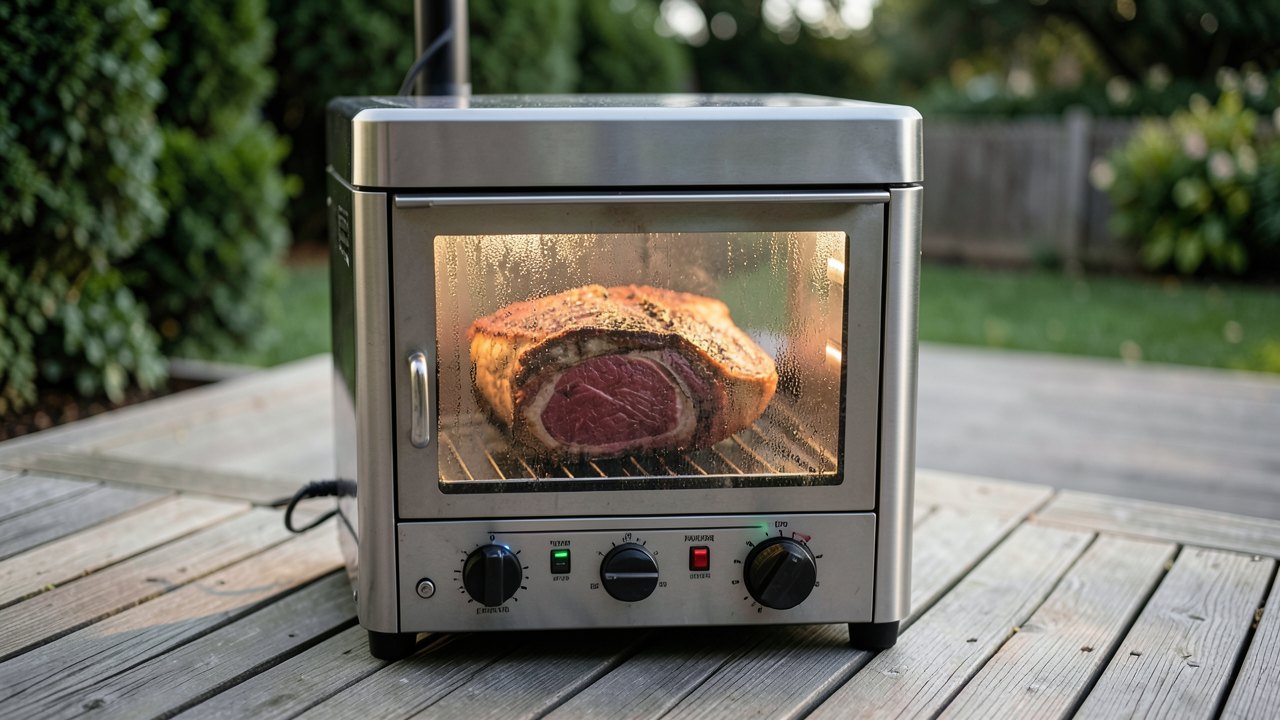
The type of equipment used plays a crucial role in moisture management. A typical 12-pound brisket loses about 20% of its weight in the first five hours, giving an average evaporation rate. In high-airflow systems like ceramic cookers, which exchange air approximately 60 times per hour, maintaining a 10% humidity level requires evaporating roughly 4 cups of water hourly. Standard water pans usually fall short of this requirement. In contrast, sealed electric smokers, which have lower air exchange rates, need only about 1 ounce of water evaporation per hour to maintain 10% humidity, a level that meat surface juices often can sustain on their own.
To effectively increase humidity in large or high-draft smokers, position the water pan directly above the heat source and keep the water near boiling. Placing porous lava rocks halfway submerged in the water can increase the evaporative surface area by more than 50%. Ensure that fat drippings do not contaminate the water pan, as this can coat the surface and impede evaporation.
Techniques such as frequent spritzing or mopping can cool the meat’s surface through forced evaporation, slowing the cooking process and disrupting bark formation. Wrapping the meat in foil or paper traps ambient moisture, raising internal humidity close to 100%, which eliminates evaporative cooling, accelerates cooking, and helps navigate thermal stalls. However, premature wrapping can lead to overcooking the exterior while leaving the interior undercooked, potentially washing out smoke flavor and creating an imbalance in texture.