Reading Smoker Temperatures: Dome vs. Grate and Resting Basics
Built-in lid gauges often read higher than the cooking surface. Use a probe at grate level, manage your lid, and rest cuts correctly to keep moisture and texture on point.
Affiliate disclosure: This post contains affiliate links. We may earn a small commission from qualifying purchases at no extra cost to you. See our editorial standards for how we research and select recommendations.
The Dome Thermometer Isn't the Whole Story
Built-in thermometers on smokers, those found on the lid and dome, are known to provide readings that are higher than the actual temperature at the cooking grate. Research supports this, indicating these gauges are unreliable for precise measurements and should not be solely trusted.
While discussions often mention a temperature difference – for instance, a lid reading of 250°F potentially representing only 225°F at the grate – it’s important to understand this is a generalized example. The data highlights a potential discrepancy, but without confirmed testing or a standard offset measurement, it's impossible to define a precise difference for each individual smoker.
To accurately monitor the temperature where your food is cooking, it’s recommended to use a remote digital probe thermometer placed directly at grate level. A two-channel monitor like the ThermoWorks Smoke handles both readings at once: one probe at the grate, one in the meat, with the numbers on a wireless receiver. Performing a few test cooks will help you determine the specific temperature difference between your smoker's lid and the grate. This allows for more accurate adjustments.
Target Ranges and Heat Management
For low-and-slow cooking techniques, a target chamber temperature range of 225–250°F is generally recommended. When cooking at higher temperatures, such as for hot-and-fast methods or poultry, aim for a range of 275–325°F. Pellet smokers often have difficulty maintaining a consistent 225°F; in these cases, setting the controller to 250°F can improve temperature stability.
Why Temperature Variance Matters
Avoid loading meat until the fire has settled and the smoker is producing thin, blue smoke. Maintaining a closed lid is crucial, as opening it can cause a temperature drop of 25–50°F.
Resting and Carryover Heat
Small variations in temperature can significantly impact the final result. A difference of just 10°F from your target temperature can be the deciding factor between a juicy and a dry cut of meat. Cooking too hot leads to excessive moisture loss before collagen has adequately broken down. Conversely, temperatures that are too low can prolong the “stall” phase, produce smoky flavors considered unpleasant or harsh, and hinder the development of a desirable bark. Maintaining the recommended temperature range is essential for balanced fat rendering, optimal texture, and clean smoke flavor absorption.
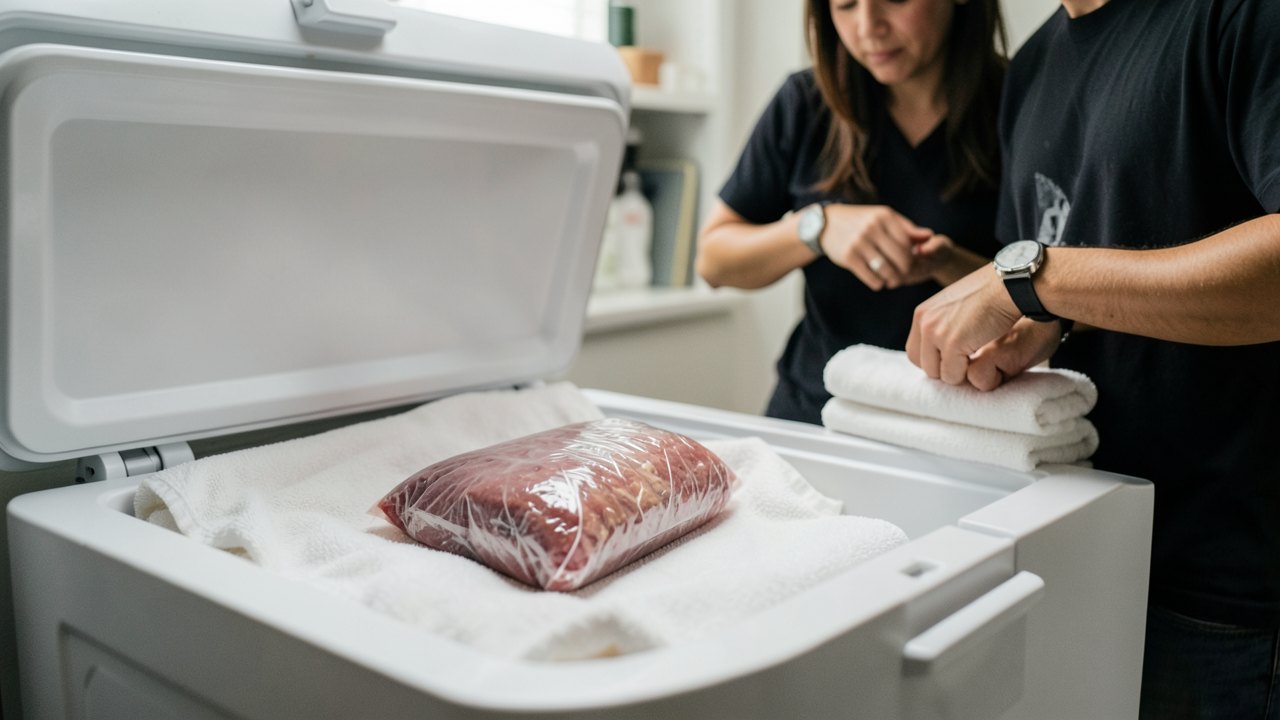
- Brisket and pork butt: 3–5 hours (wrapped or in a cooler).
- Beef ribs: 30–60 minutes.
- Baby back ribs, spare ribs, and poultry: 15–20 minutes.
- Pork loin and sausage: 10 minutes.
- Salmon: 5–10 minutes.
It's also important to consider that large cuts of meat will continue to cook internally even after they are removed from the smoker, typically increasing in temperature by an additional 5–10°F. Plan your resting periods accordingly, as this resting time allows juices to redistribute and collagen to fully set, which further refines the texture and moisture content of the meat.