Injection Techniques for Barbecue: Moisture, Flavor, and Procedure
Everything you need to know about injection, from selecting the right liquids to handling variances in technique and timing.
The cheat sheet
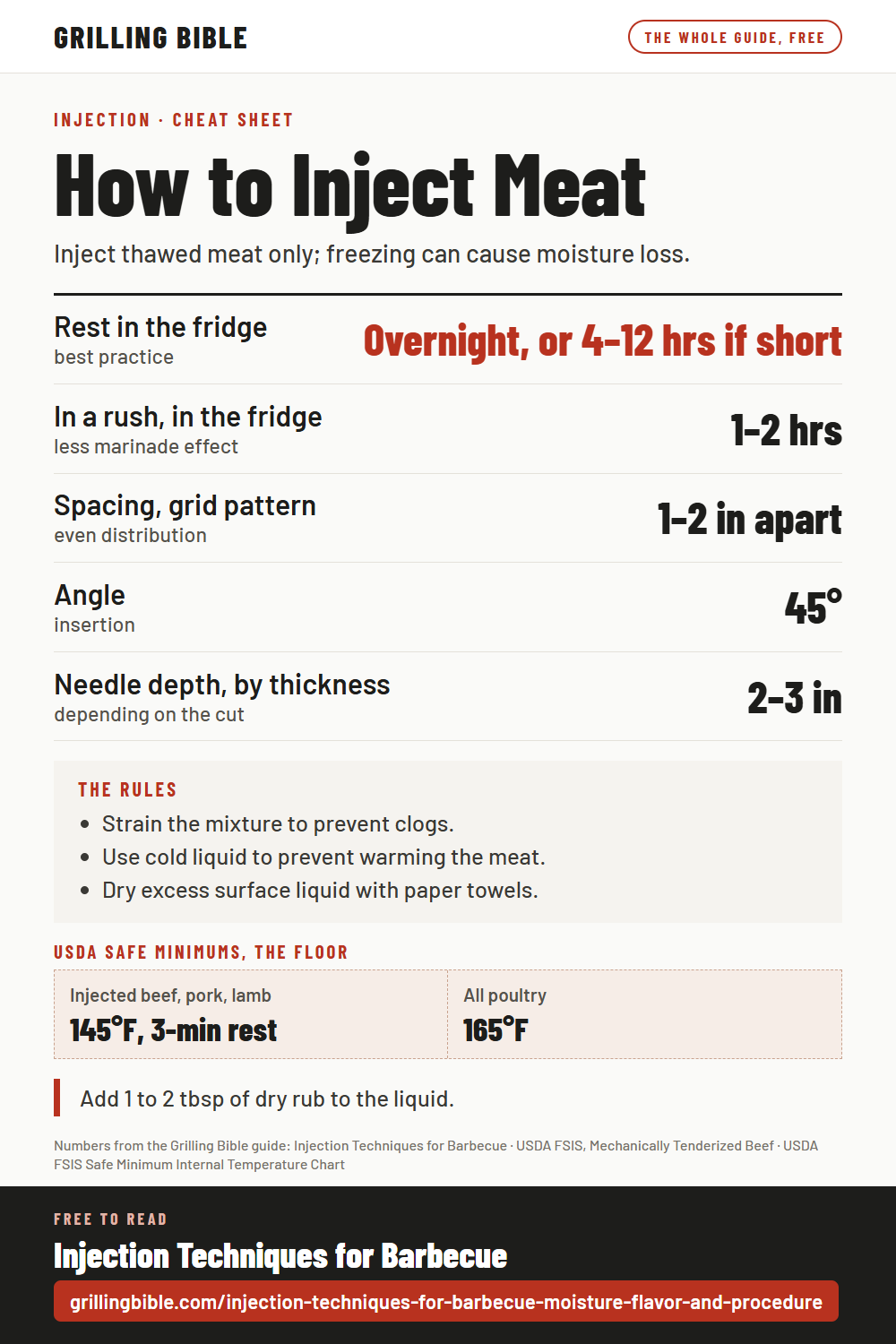
The key numbers from this guide on one page. The whole sheet is right here: print it or keep the image, free, no email needed.

What Is Injection and Why Use It?
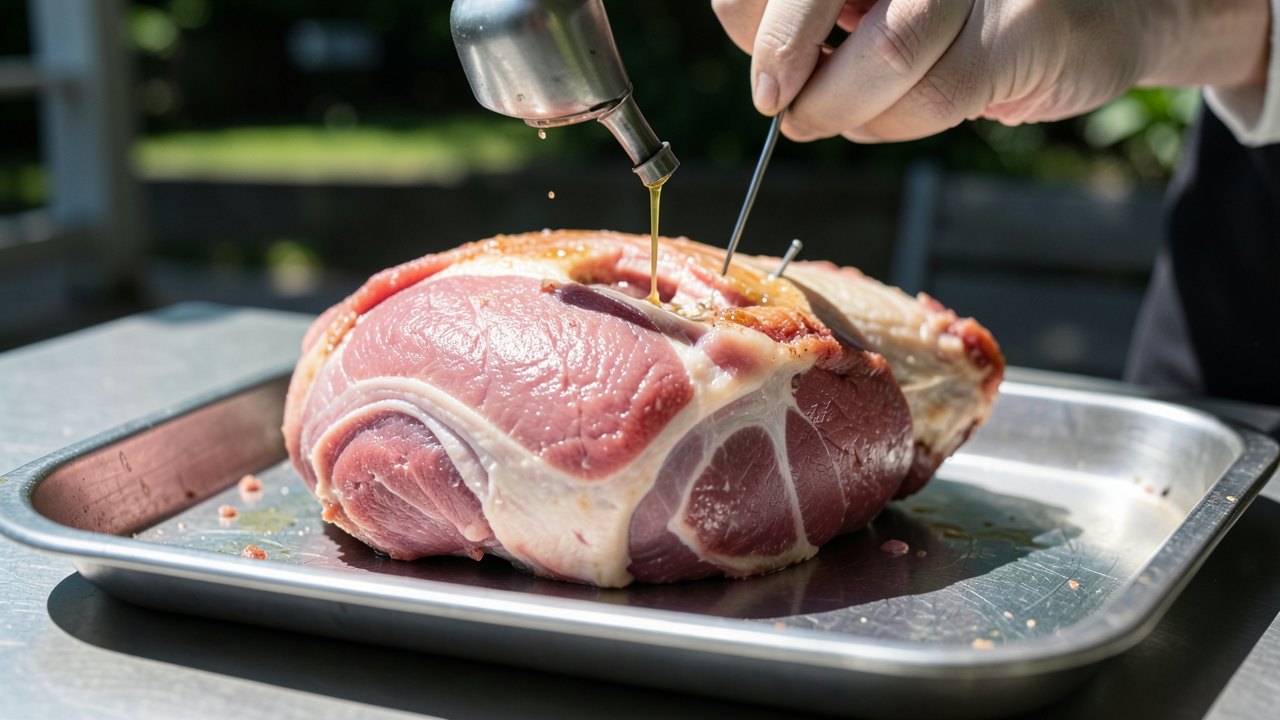
Injection is a technique used to infuse meat with flavor and moisture from the inside out. This method is particularly effective for large, thick cuts that might dry out during long cooking processes, such as brisket, pork butt, turkey, and lean cuts like pork loin. While injection isn't strictly necessary for a successful cooking outcome, it's widely used in competition settings to impress judges and is a valuable technique for home cooks looking to enhance the flavor and juiciness of their meat.
Tools and Safety
Stainless steel injectors are the preferred choice for their durability and hygiene, though plastic injectors are a more affordable but less durable alternative. A pistol-grip or gun-style injector works well for high-volume jobs or large cuts. It’s crucial to clean the injector thoroughly after each use by rinsing it with water to clear any residue. Always strain the injection mixture to prevent clogging of the needles.
Safety is paramount in this process. Only inject meat after it has been fully thawed, as freezing can cause moisture loss and alter the texture. Use cold injection liquid to prevent warming the meat or precooking the surface. Aim for the lean muscle fibers and avoid injecting fat caps or seams.
Liquids and Additions
A variety of bases can be used for the injection liquid, including beef or chicken stock, apple juice, apple cider vinegar, beer, melted butter, Worcestershire sauce, soy sauce, or water/salt brines. Enhance the mixture with spices, herbs, garlic or onion powder, brown sugar, and 1 to 2 tablespoons of the dry rub intended for the exterior. In competition settings, phosphates may be added to retain moisture, but these must be used carefully.
A well-known competition-style recipe by Myron Mixon involves boiling 1/2 quart of water, then dissolving 1.5 tablespoons of beef base and 1.5 tablespoons of au jus concentrate, or one can of beef broth. After cooling completely, this mixture is ready for injection.
How Much Liquid?
Dosage varies. Some sources recommend using 1 to 1.5 cups of injection liquid per whole brisket, while others suggest a ratio of 1 ounce of liquid per pound of meat. Since whole briskets can differ significantly in weight, the ratio method may require more volume than the cup-per-brisket estimate. Regardless of the amount, add 1 to 2 tablespoons of your exterior dry rub to the liquid.
Timing and Resting
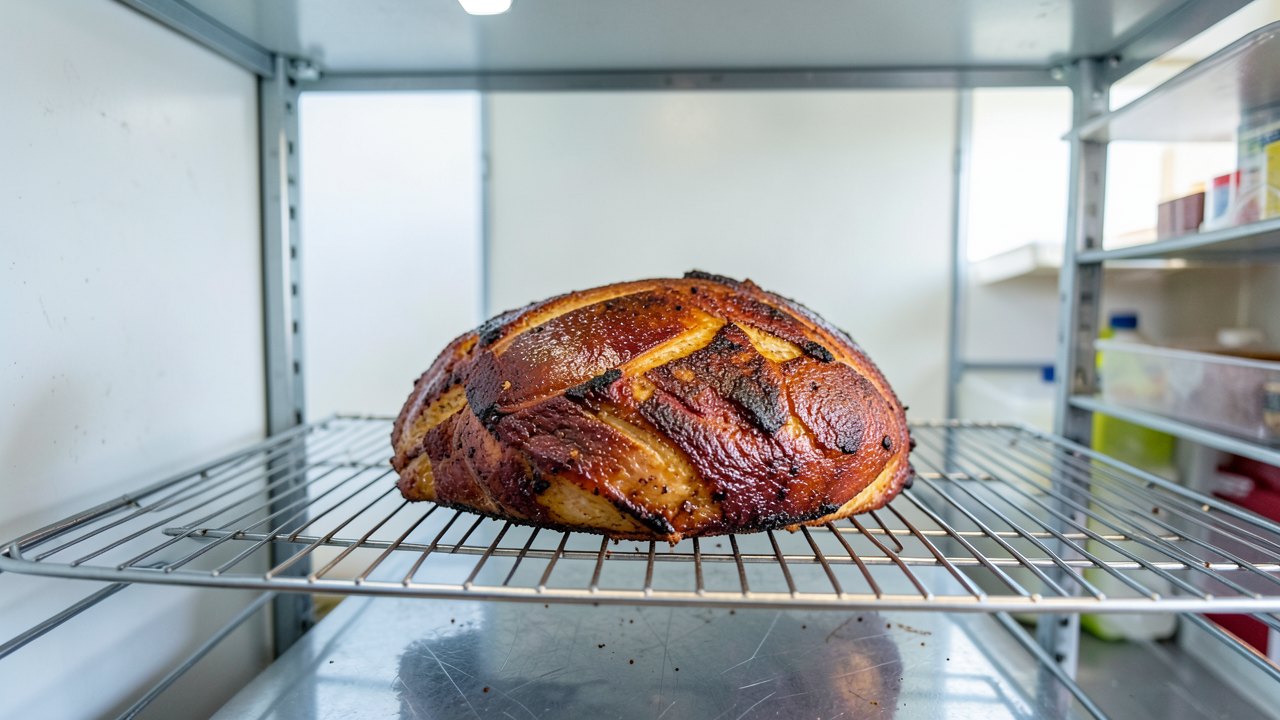
Refrigerating the meat overnight after injection is the best practice, allowing time for full absorption and flavor penetration. If time constraints are an issue, a rest of 4 to 12 hours is generally sufficient for distribution. There's some debate on the minimum effective time: some sources say 4 hours works, while others recommend a 6-hour minimum. In a rush, injecting just 1 to 2 hours before cooking is possible, though this primarily preserves freshness rather than enhancing the marinade effect.
Steps and Procedure
Whisk all ingredients until thoroughly combined and strain the mixture to prevent clogs. Load the injector, purge air bubbles by drawing liquid in and pushing the air out. Perform the injection over a sink or pan to contain spills.
Inject in a grid pattern to ensure even distribution. Insert the needle fully or to a depth of about 2 to 3 inches, depending on the thickness of the cut. Inject at a 45-degree angle. Depress the plunger while slowly withdrawing the needle to spread the liquid along the insertion path. Injections should be spaced 1 to 2 inches apart, or in a denser pattern of 1-inch squares.
Rub Timing and Cooking
Some sources instruct injecting parallel to the grain to avoid discoloration patches, while others don’t mention grain orientation. After injecting, dry the excess surface liquid with paper towels. Apply the dry rub after drying the meat, with some sources recommending application before refrigerating overnight and others suggesting application after the rest period, just before cooking.
USDA FSIS advises: “Keep meat and poultry refrigerated until ready to use. Only take out the meat and poultry that will immediately be placed on the grill.” Injection pierces the meat with a needle, as mechanical tenderizing does, and FSIS says to “thoroughly cook all mechanically tenderized meat to an internal temperature of 145°F with a 3-minute rest time.” Cook injected brisket at 225°F, spritzing or mopping every hour during the unwrapped phase and wrapping midway through the cook to retain moisture. After cooking, rest the wrapped brisket in a cooler for up to 4 hours.
The Science Behind It
Injection helps replace fluids lost during long cooking processes and delivers flavor to the center of large cuts. The salt in the injection solution aids in moisture retention. The process also helps tenderize the meat and prevent dryness. Using cold liquid prevents premature warming of the meat, protecting both texture and safety.
Injection offers advantages over brining for certain cuts. Wet brining a brisket can lead to a texture similar to corned beef, which is often not the desired outcome. A dry brine is effective for surface moisture retention but can’t penetrate to the center of a whole packer brisket, making injection necessary for internal seasoning.