How Smoke Clings to Meat: Adhesion, Flavor, and the Smoke Ring
Smoke sticks to the surface, not the center. Learn how chemistry and physics drive flavor absorption, what creates the smoke ring, and how to manage airflow and moisture for better results.
Smoke Chemistry and Composition
Wood combustion is a complex chemical process that breaks down the wood's structural components—cellulose, hemicellulose, and lignin—to create the characteristic smoky flavor associated with smoked meats. Lignin breakdown releases phenols, syringol, and guaiacol, contributing directly to the smoky taste. Lower temperatures encourage the breakdown of hemicellulose and cellulose, adding nuanced aromas. The process also generates aldehydes, organic acids (affecting color and the Maillard reaction), alcohols, and esters, all contributing to flavor complexity. However, high temperatures and incomplete combustion can produce undesirable compounds, including bitter-tasting hydrocarbons.
Adhesion and Surface Physics
The process of smoke adhering to meat is primarily a surface phenomenon driven by thermophoresis. This means smoke particles naturally migrate from warmer areas to cooler surfaces. Because uncooked meat is typically cooler than the surrounding air, smoke is drawn towards it. Wet surfaces provide a better environment for these particles to adhere. While a layer of still air around the meat (the boundary layer) limits direct contact, moisture and fat help trap the smoke particles. This adhesion is strongest when the meat is cold and wet, gradually diminishing as the surface warms and dries during the cooking process.
Penetration Limits and Absorption
Contrary to some perceptions, smoke does not deeply penetrate the meat. The majority of the flavor remains concentrated on the surface, with only a small amount extending about a quarter-inch inward. Although absorption doesn't have a strict endpoint, meat continues to absorb smoke flavor as long as wood is actively burning, albeit with decreasing efficiency as the meat’s temperature rises. Water, fats, and proteins within the meat each play a role in capturing different components of the smoke's flavor profile.
The Smoke Ring
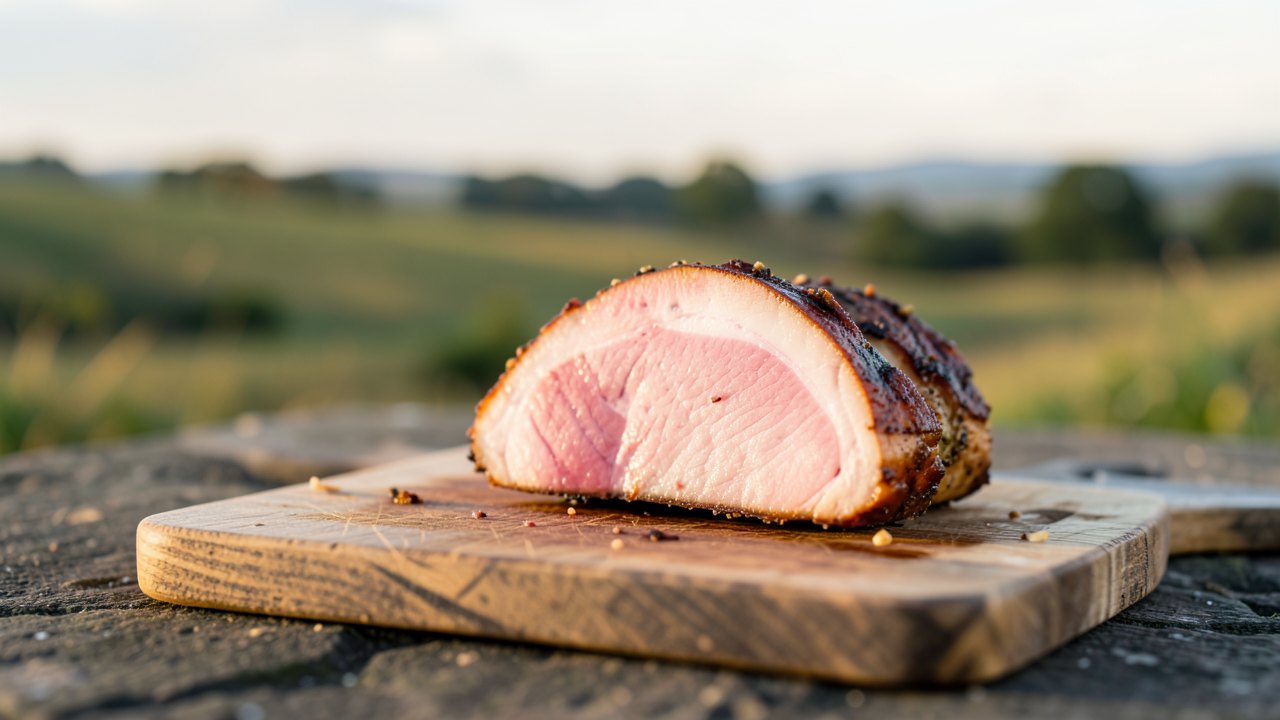
The characteristic pink smoke ring visible on smoked meat results from a reaction between nitric oxide and carbon monoxide (produced during combustion) and the myoglobin and iron present in the meat. This reaction creates a pink coloration that is "fixed" before the proteins within the meat denature – a process that occurs between 160°F and 170°F. These rings usually don't extend deeper than half an inch. The presence of a smoke ring is an indicator of low-and-slow cooking, but it does not guarantee either superior flavor or tenderness. A thick layer of fat on the meat’s surface can impede gas penetration, potentially diminishing or eliminating the formation of a smoke ring.
Wood Amounts and Temperature
To prevent bitterness, starting with a small amount of wood, around 2 to 3 ounces, is recommended. Additional wood can be added for larger cuts, but using less is generally preferable. The process of collagen converting to gelatin – which tenderizes the meat – occurs within a temperature range of 160°F to 205°F. High heat can cause collagen to contract and toughen the meat. A slow cooking process provides more time for gases to penetrate and react before the meat reaches the denaturation point that would diminish the smoke ring.
Airflow and Fuel Nuances
Maintaining balanced airflow is critical for optimal results. The ideal smoke is a thin, blue stream, indicating efficient combustion and a positive flavor profile. Restricting airflow from maximum settings slows the burn and promotes the creation of desired smoke molecules. However, completely depriving the fire of oxygen leads to black smoke and bitter, incomplete combustion products. The goal is to find a balance.
There is conflicting information regarding the use of lump charcoal. Some sources suggest that the irregular shape of lump charcoal can restrict airflow, which may reduce the production of nitrogen oxide and hinder smoke ring formation. Conversely, other sources champion high-quality lump charcoal for its consistent heat output and clean smoke, without commenting on its impact on gas production.
Management and Practical Steps
Maintaining surface moisture is beneficial for smoke adhesion. Water pans and periodic spritzing help keep the meat's surface wet, which aids in smoke capture and thermophoresis. Spritzing also slows down surface heating, providing more time for the smoke ring to develop. Trimming excess fat can promote deeper gas penetration, potentially leading to a more visible ring. To ensure adequate nitrogen oxide production for ring formation, it's recommended to utilize wood or charcoal and to opt for dry hardwoods rather than softwoods.